
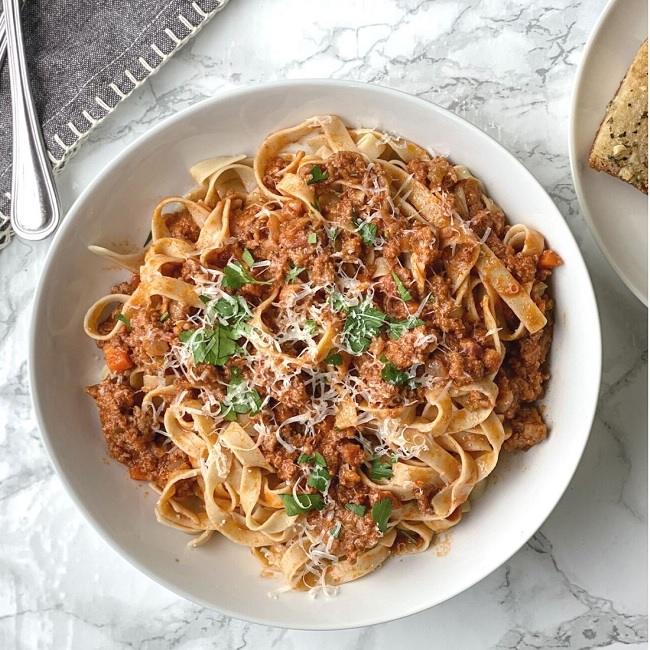
Ragu alla Bolognese is not only a pasta sauce. A blend of flavors tender meat, sweet aromatics, gentle tomato and creamy milk, it is slowly cooked into a thick hearty ragu, which sticks so well to the egg pasta. It was created in Bologna, Italy, and it is a dish that is based on the traditions of eating in Italy to be patiently, quality-focused and balanced. Instead of sinking the pasta in tomato sauce heavy, genuine Bolognese honors meat as the main dish with tomato acting as a background warmer. The outcome provides an all-satisfying, but wholesome meal: full but well-rounded, luxurious, yet sophisticated.
Due to the rich taste and homely texture, Bolognese is the perfect meal in a family dinner or special events or on cold nights. You can know why the ragu tradition is important in Italian households once you have tasted it.
Crafting the Sauce: Key Ingredients and Their Purpose in a Classic Ragù
The essence of Ragu alla Bolognese is based on the few ingredients that are simple yet meaningful. Mince or rather coarse beef forms the base: meaty, hearty, strong. Frequently this is paired or accompanied by pork or pancetta in order to add fat and texture. Next there is the Soffritto, chopped finely of onion, carrot and celery, the aromatic foundation. These vegetables are slow to soften and they give out sweetness and earthly taste which form the foundation of the ragu.
White or red wine splash also deglazes the meat and will provide the acid to cut through the richness. A single can of tomato paste, or a small can of tomato paste, is a mere hint of tomato; classic Bolognese is not that dependent on tomato. The mixture is moist with simmering broth (or water). Importantly, addition of a bit of milk or cream to the sauce dilutes the acidity and provides smooth texture. Just add salt, pepper, perhaps a pinch of nutmeg and allow natural flavors to take over.
The balance of this ingredient makes the sauce to be more meat driven, aromatic, and incredibly comforting as opposed to being tomato dominated.
How to Cook Ragù alla Bolognese: Step‑by‑Step for Deep Flavor and Perfect Texture
Start by warming some olive oil (and butter or lard fat) in a heavy-bottomed pan on low heat. Add the diced finely onion, carrot and celery; cook lightly until the vegetables are tenderized and give off their aromas -the basis of taste.
Then the minced meats (beef and optional pork or pancetta) are added. Roast them in the middle of the medium heat, allowing the meat to give out its own fat and start caramelizing. Such browning develops deep savory flavor.
After the meat has been browned, add the wine to deglaze the pan. Stir, and allow the wine to cook away nearly, to concentrate its flavor and to loosen up browned stuff at the bottom.
Next add a little tomato paste and spread it evenly over the meat and the vegetables. To thin the mixture, add a little broth or water, turn the heat to low and partially cover with the lid and allow the sauce to simmer.
When the sauce has been developed (after some time, not less than 1.5-2 hours, but preferably more), warm milk (or cream) is added. The milk neutralizes the acidity of the sauce and makes it smoother as well as combines flavors. Simmer on low heat until the ragu is thick and cohesive and sticks to pasta.
It is best served on broad, flat pasta to allow the sauce to cover all the strands. It can be finished off by sprinkling of freshly grated hard cheese (such as Parmesan) on top to provide a salty, nutty contrast to the rich sauce.
Why Slow Cooking and Patience Matter: The Art Behind a Perfect Bolognese
Ragu a la Bolognese is no rush sauce. Time and slow change is its secret. When you prepare meat and vegetables under low heat, the flavors blend in, as you cook the food slowly. The onion, carrot and celery aromatic backbone softens and becomes sweeter; meat is fully browned and gives out the juices; wine is evaporated and leaves complex flavors; the milk cuddles and fills out the sauce. This gradual dissolving does not make it greasy and creates a consistent texture.
Assaulting the process is a cheating step: meat can be too hard, sauce can remain too liquid, and flavors can be too superficial. However, a ragu can become rich, deep and full of that energy so typical of comfort food with patience. The outcome is rich and dimensional and not deep and light.
Serving Suggestions, Pairings and Storage Tips for Your Ragù alla Bolognese
It is traditionally served with fresh egg pasta – wide varieties such as pappardelle. Their large ribbons snare the meat and the sauce. However, rigatoni, penne or sturdy dried pasta can be used in place of fresh pasta.
To make it a complete meal, a simple green salad and crusty bread to absorb additional sauce should be added. The savory richness is added by a light shaved Parmesan on the top. To add depth to the ragu, a glass of dry red or white wine can be added when it is a special occasion.
Leftovers store well. Cool or allow to cool and transfer to an airtight container and refrigerate. Ragu is also often even more flavorful the following day after spending the night. To store longer, freeze portions. Warm up mildly in low with a small addition of water or broth to thicken the sauce again.
Why Ragù alla Bolognese Deserves a Spot in Your Home‑Cooking Repertoire
Ragu alla Bolognese combines warmth, heartiness and customary – all in one pot. It demonstrates the way that simple ingredients, handled with patience and time, can produce very fulfilling meals. It is appropriate not only to everyday dinners but festivities as well.
The sauce is versatile and therefore convenient. You can make it large to serve a group of people or only two portions. It is possible to prepare it in advance and refrigerate or freeze. There are various types of pasta that you can match with or even you can fill it in some layered dishes such as lasagna.
More importantly, ragu also teaches patience in the kitchen and appreciation of flavors. At a time of quick food, it reminds you that there are meals that are worth taking time to savor, worth letting time to develop.
When you make ragu alla Bolognese the first time, which is a slow-cooked dish, layered, followed by letting ingredients mingle, you may find it is one of your favorites in the family. The muscular goodness of meat, the light sweetness of vegetables, the smoothing effect of milk – all these provide a sauce that is traditional, and soothing and most fulfilling.